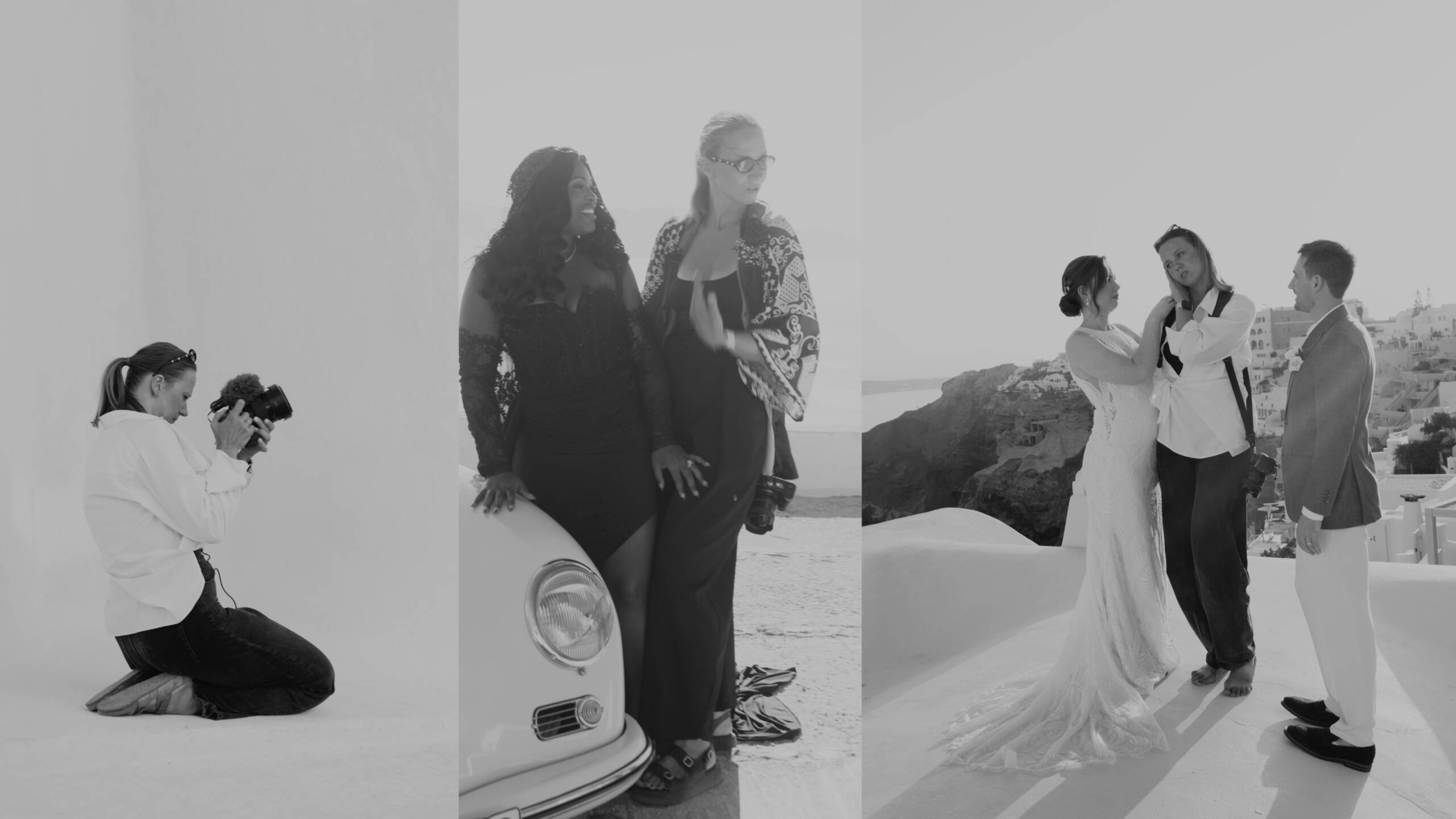
“We’re awkward on camera.” “We don’t know how to pose.” We hear these words from couples all the time, often before we have even started filming. Our answer is simple: you do not need to arrive knowing what to do. We have guided many couples through this, and we will work it out together.
And there is something else we want you to know: it is okay to feel awkward sometimes. Some movements we suggest may feel unfamiliar. Looking natural on screen and feeling completely natural while being filmed do not always happen at the same moment. That is why we are there: to guide you, watch what is happening in the frame and show you what is working.
You Do Not Have to Invent What to Do
Couples often worry about posing for photographs more than they worry about video. Yet video brings its own challenges. We are watching how a movement begins and ends, how the light changes as you turn, how your clothes move and where the focus needs to be.
Walking together, dancing and sharing a laugh can give us beautiful footage. A more cinematic scene may also need a particular pace, a thoughtful pause or a carefully guided movement. Our job is to translate all of that into a simple action you can understand.
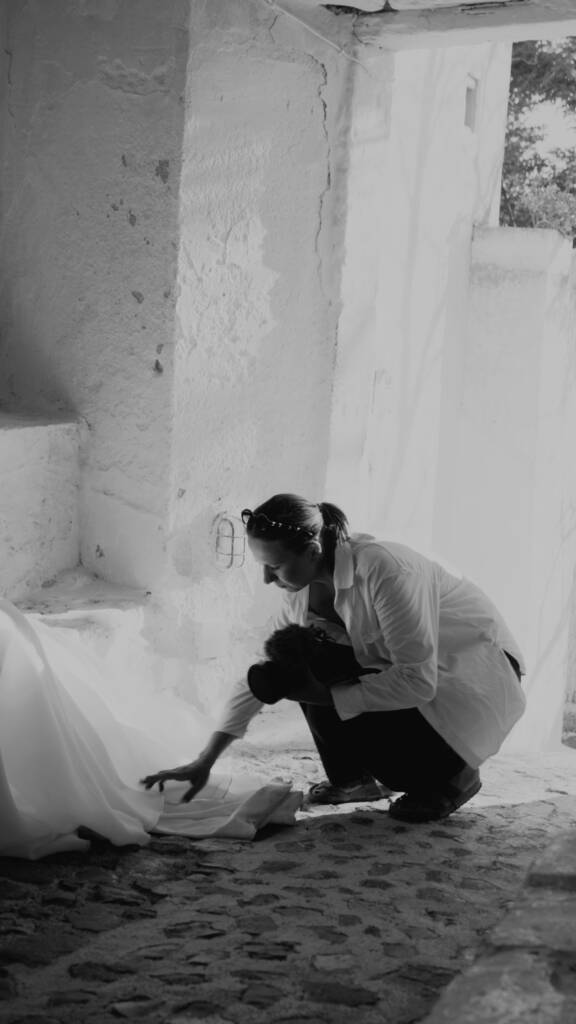
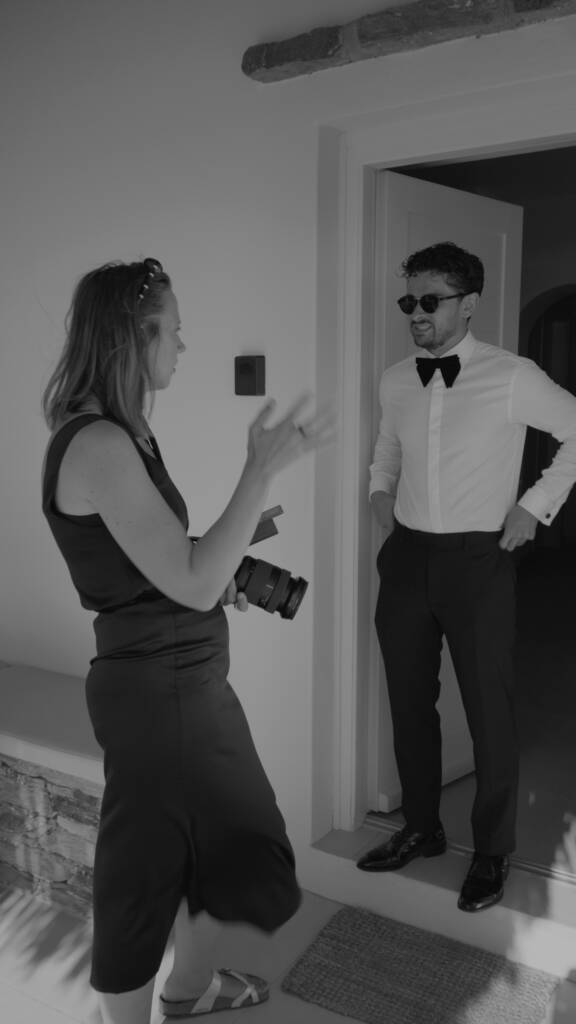
You should never have to stand in front of the camera wondering what we expect from you. We explain the scene before we begin, often demonstrate it ourselves, and give you something specific to focus on.
A Clear Prompt Makes All the Difference
“Look romantic” can be a surprisingly difficult instruction. What do you actually do with your eyes, your hands or your body? A clear sequence gives you somewhere to start.
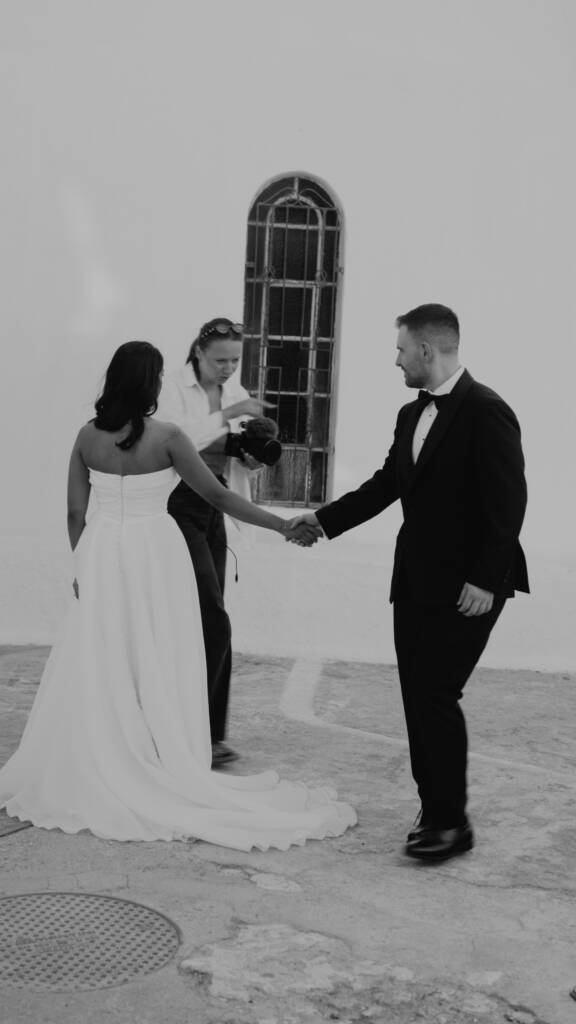
For a Quiet, Thoughtful Portrait
We might ask you to look into the distance and remember an important moment in your life, perhaps starting a new job or making a meaningful decision. Having a real memory to think about can help you settle into the expression, instead of trying to manufacture a “serious face.”
For the Moment Before a Kiss
We might say: “Look into her eyes. Slowly let your gaze move down towards her nose, then her lips. Stay there for a moment. Think about kissing her. Then lean in.”
Written down, this sounds very deliberate. During filming, it gives you a gentle sequence to follow and lets us capture the anticipation before the kiss. You can take your time because you know what comes next.
For a Playful Moment
We may ask you to imagine that your partner has just said something that made you laugh. Then we demonstrate how your body might respond: a little sway, leaning forward, moving back towards each other. Showing the movement often makes the instruction easier to understand, and sometimes the demonstration itself gets the laughter started.
Music can help, too. So can remembering a funny moment from your relationship. We try different approaches and pay attention to what feels comfortable for you. If a suggestion feels forced, we change it.
Why We Might Ask You to Do Something Again
Before we start, we explain that we may repeat a few movements. A wedding film often needs more than one view of a moment: a wider frame that shows the setting, a closer portrait or a detail of your hands.
“That was lovely, let’s get another angle” is something you may hear. Occasionally, we will ask for one more version just to be sure we have what we need. A repeat does not automatically mean you did something wrong.
We explain the action first so you can follow it without a constant stream of instructions. If something becomes unclear, we pause and help. And if a scene is making you uncomfortable, we can find another way to film it.
Seeing a Good Clip Can Help You Relax
Reassurance is useful, but seeing yourself on screen can make it much easier to believe. Whenever possible, we like to capture something early that we can show you on the camera.
A movement that felt slightly strange may look soft and effortless in the footage. Seeing that helps you understand what we are creating together. It also gives you a chance to tell us what you like or what still makes you uncomfortable, so we can adjust.
Working with Santorini’s Wind, Steps and Wedding Clothes
In our experience filming in Santorini, “just walk naturally” is not always a practical instruction. There may be steps, uneven paths, strong wind, a long train and heels to consider. We build the scene around what you can comfortably do.
A Dress You Can Move In
We work with the outfit you have chosen. If a long dress makes walking difficult, we can help arrange the fabric or show you how to hold it alongside your bouquet so the movement looks intentional. Sometimes a small turn or a seated moment works better than a long walk.
If you ask us for advice before choosing your dress, we encourage you to consider how easily you can move in it and how the fabric will cope with outdoor locations. A full skirt or a train that marks easily may simply need more care and time during filming.
Comfortable Footing
Lower heels or comfortable shoes for moving between locations can make the experience easier, especially in the heat. You can change into your wedding shoes for the shots where they will be visible.
Sometimes, with a long dress and a suitable surface, removing shoes briefly is an option. In other situations, we choose a flat area or seated poses. The movement should work for your footing, your outfit and your comfort.
Hair That Moves in the Wind
In video, hair keeps moving throughout the shot. We account for this by adjusting the angle, choosing a different position or filming a wider view. A turn or a flowing movement can also make the wind feel like part of the scene.
For a windy day, our practical preference is a hairstyle that can be secured, or an option to gather loose hair if needed. A touch-up or a planned hairstyle change with your stylist can save time and help you feel comfortable for the next part of the day.
Tell Us What Helps You Feel Confident
If you prefer one side of your face, dislike a particular angle or feel self-conscious about something, you are welcome to tell us. You can share this before the wedding or quietly during filming. You do not need to apologise or explain why.
We listen and adapt. That can mean changing the camera position, adjusting how you stand together, arranging clothing differently or choosing another location. Differences in height also influence how we position you and frame the scene.
Occasionally, a location’s light and background limit the available angles. We can explain the options and decide together, or move somewhere that works better for you. If you ask us not to film something, we respect that.
Showing you a clip can help us understand your preferences more clearly. The aim is for you to feel listened to and recognise yourself in footage you enjoy watching.
When One Partner Is More Comfortable on Camera
This is completely normal. You do not both need to enjoy being filmed in the same way. We look for an activity that gives you something familiar to do together.
- Practise a little of your first dance if movement or music helps you relax.
- Take a short walk together, or individually if that feels easier.
- Sit somewhere comfortable with support for your back.
- Talk to each other or share a familiar joke.
- Spend a few moments on separate portraits so each person can follow their own pace.
We can also vary the framing. Wider views, hands, clothing and other details all help tell the story. Every shot does not need to be a close portrait, and neither partner has to carry the same kind of scene.
Some of the Best Moments Happen Between Instructions
Alongside the scenes we guide, we leave room for you to interact without a task. Talking while we prepare the next shot, adjusting each other’s clothes or sharing a quiet moment can give us footage that feels especially personal.
Sometimes the most helpful thing we can do is give you a little space and film from a distance. You can spend time together without feeling that you need to respond to the camera every second.
Feeling Comfortable Starts with a Connection
Whenever possible, getting to know each other before the wedding gives us a useful starting point. When that is not possible, we begin building that connection on the day.
It starts with small things: asking how to pronounce your name, finding out what you like to be called and noticing what makes you smile. A shared joke can become a familiar reference throughout the shoot. A small mishap can sometimes become something we laugh about together, if that feels right to you.
We pay attention to your response. Some couples enjoy playful energy; others feel more comfortable with a calm voice and a little more time. Getting to know that difference is part of our work.
What You Need to Bring to the Shoot
You do not need to memorise poses or practise looking romantic. Tell us what worries you, let us know if something feels uncomfortable and give yourself permission to feel a little unfamiliar with the process.
Our role is to give you clear direction and help you feel confident as we go. We watch the light, movement, focus and framing. You can concentrate on one simple action at a time and on the person beside you.
Planning your wedding or a couple’s shoot in Santorini? Get in touch with Santorini.video and tell us what you have in mind, including anything that makes you nervous about being on camera.